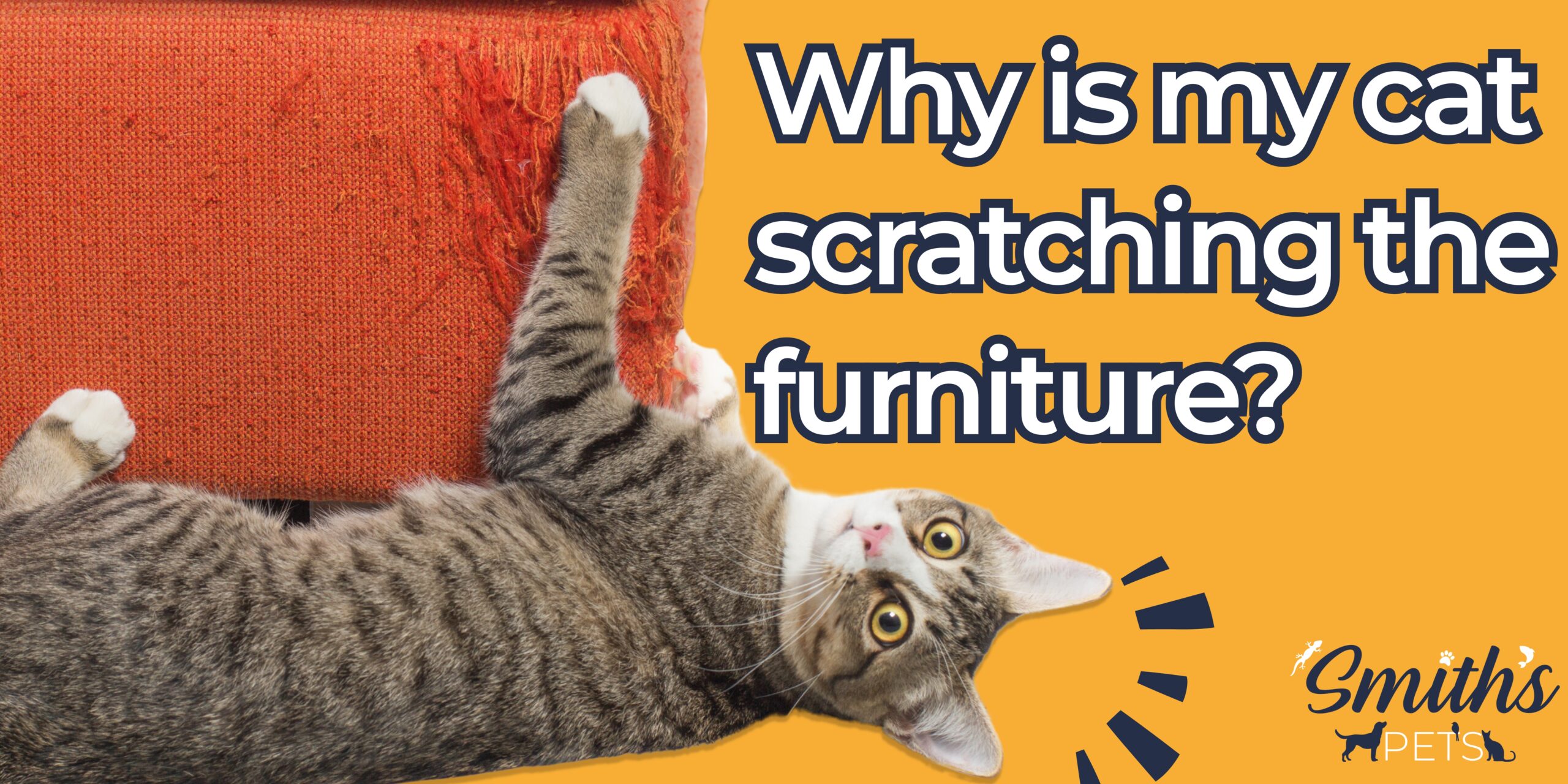
Why is my cat scratching the furniture?
Why is my cat scratching the furniture is a really common question often asked in store and online.
Cats scratch furniture for several normal reasons, including claw maintenance, stretching, marking territory, and relieving stress or boredom. Scratching is a natural behaviour, so the goal is not to stop your cat scratching completely, but to redirect it towards suitable scratching areas instead.
With the right scratching posts, environmental changes, and positive reinforcement, most cats can learn to leave sofas, carpets, and chairs alone.
Why do cats scratch furniture?
Scratching is completely natural for cats. Even calm, friendly indoor cats still need to scratch regularly.
Common reasons include:
- Removing the outer layer of old claw sheath
- Stretching muscles and tendons
- Marking territory using scent glands in their paws
- Releasing energy or frustration
- Seeking attention or stimulation
- Feeling stressed or anxious
Furniture is often attractive because it is stable, tall, and covered in materials cats can grip easily.
Is scratching a sign my cat is unhappy?
However, excessive scratching can sometimes suggest:
- Boredom
- Stress
- Changes in the home
- Lack of enrichment
- Competition with other pets
- Not enough suitable scratching options
If scratching suddenly increases, it is worth looking at what may have changed in your cat’s environment.
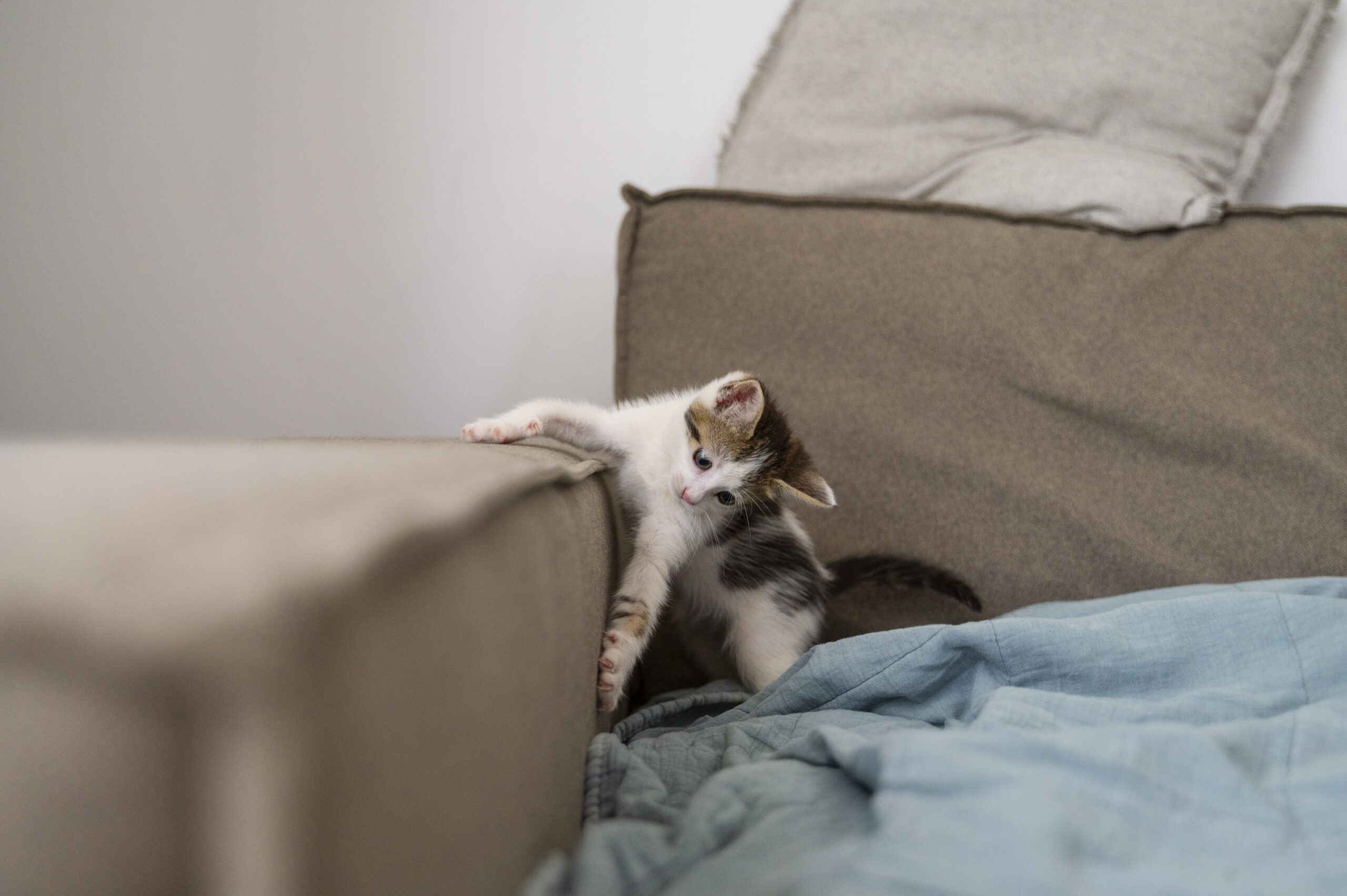
How can I stop my cat scratching the sofa?
Punishing cats for scratching rarely works and can actually increase stress-related behaviours. Instead, it is far more effective to redirect the behaviour towards appropriate scratching areas and make the sofa less appealing temporarily.
What makes a good scratching post?
Many cats ignore scratching posts because they are not suitable for their preferences.
A good scratching post should be:
- Tall enough for your cat to fully stretch upwards
- Strong and stable so it does not wobble
- Covered in sisal, rough fabric, or another textured material
- Positioned somewhere your cat already likes to scratch
Some cats prefer upright posts, while others enjoy flat scratch mats or cardboard loungers. Offering different styles can help you discover what your cat prefers.
Where should I place scratching posts?
Location is extremely important. A scratching post hidden in a quiet corner may never be used.
Try placing scratching areas:
- Next to the sofa or furniture your cat currently scratches
- Near entrances or windows
- Close to sleeping spots
- In rooms where your cat spends most of their time
Cats often scratch in visible, important areas of the home, so placing posts in social spaces usually works best.
How can I encourage my cat to use a scratching post?
You can encourage your cat to use a scratching post by making it more appealing and rewarding to interact with. Sprinkling a small amount of catnip onto the post can attract some cats, while rewarding your cat with treats or praise when they use the post helps create positive associations. Playing with toys near the scratching area can also encourage your cat to interact with it naturally. If your cat approaches the sofa to scratch, calmly redirecting them towards the scratching post can help reinforce the behaviour you want to encourage.
Avoid physically moving your cat’s paws onto the scratching post, as many cats dislike this and may become reluctant to use it afterwards.
Should I use sprays or punishment?
Shouting at your cat, spraying them with water, or using physical punishment is not recommended. These methods rarely solve the problem and can increase anxiety and stress, damage trust between you and your cat, and sometimes create additional behavioural problems.
In some cases, punishment may even make scratching behaviour worse over time.
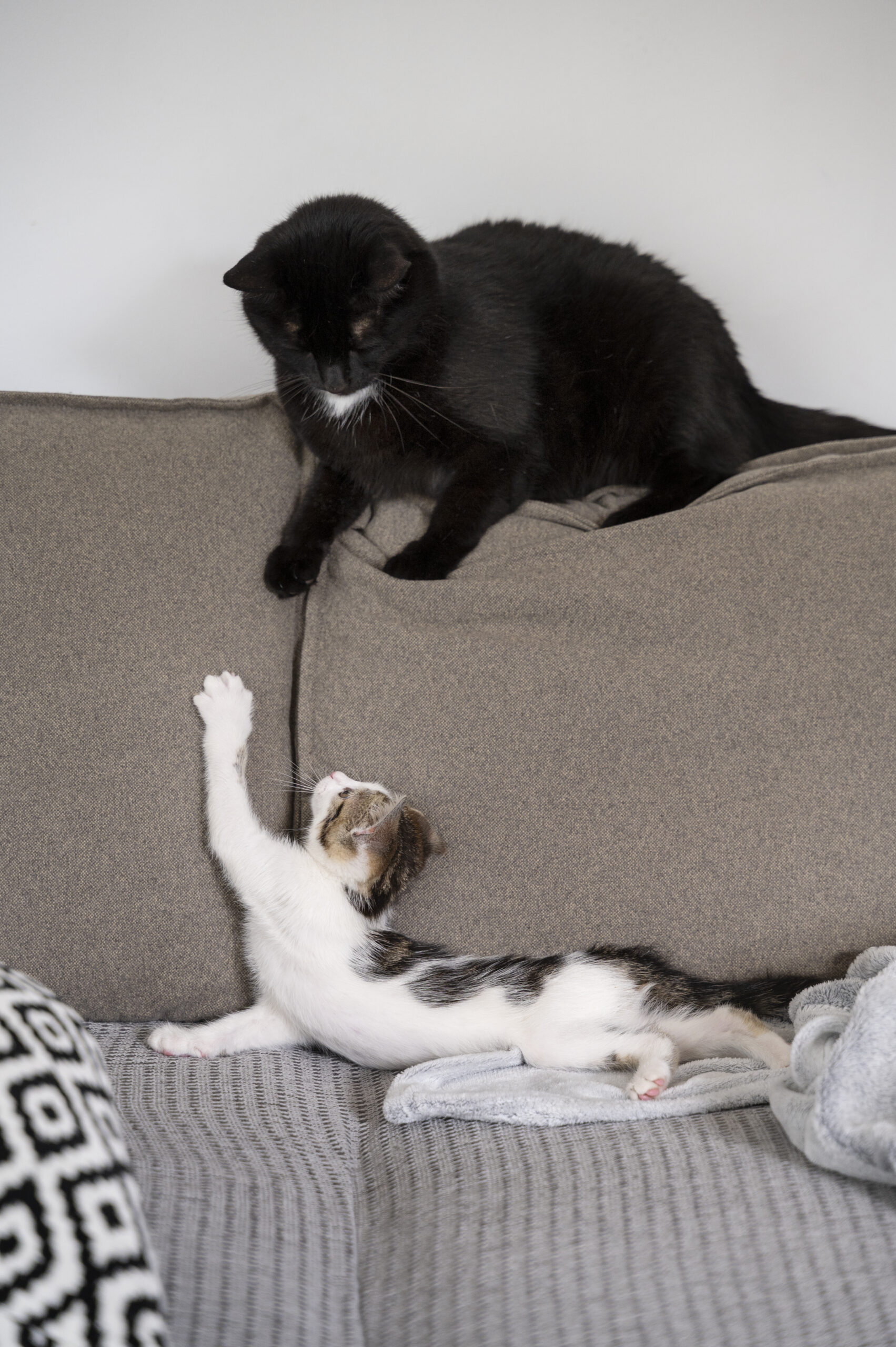
Could boredom cause sofa scratching?
Yes. Indoor cats especially may scratch furniture more when they are bored or under-stimulated.
Helpful enrichment ideas include:
- Cat trees and climbing shelves
- Puzzle feeders
- Interactive play sessions
- Window perches for outdoor viewing
- Rotating toys weekly to keep them interesting
Cats that receive regular mental and physical stimulation are often less likely to develop unwanted scratching habits.
Can stress make cats scratch more?
Yes. Scratching can sometimes become a stress-relieving behaviour.
Common stress triggers include:
- Moving house
- New pets
- New babies
- Loud or busy environments
- Changes to routine
- Seeing outdoor cats through windows
Providing safe hiding spaces, predictable routines, and calm enrichment can help nervous cats feel more secure.
Should I trim my cat’s claws?
Regular claw trimming can help reduce furniture damage, particularly in indoor cats.
However:
- Trimming claws will not stop scratching behaviour completely
- Cats still need suitable scratching outlets
- Claws should only be trimmed carefully and safely
If you are unsure how to trim your cat’s claws properly, ask your vet or veterinary nurse for guidance.
Do cats scratch furniture out of spite?
No. Cats do not scratch furniture to be naughty or spiteful. Scratching is a natural instinctive behaviour.
What type of scratching post is best?
Most cats prefer sturdy, tall scratching posts covered in sisal or another rough textured material. Many cats also enjoy cardboard scratchers.
Will my cat stop scratching as they get older?
Yes! All well behaved pets are welcome in both of our shops. We love meeting your pets from the fluffiest dog to the chattiest parrot come by and say hi!
When should I contact a vet?
Contact your vet if your cat:
- Suddenly begins excessive scratching
- Seems distressed or unusually restless
- Is overgrooming alongside scratching
- Has damaged, bleeding, or infected claws
- Appears painful when walking or scratching
- Shows major behavioural changes
In some cases, stress, pain, skin irritation, or underlying medical conditions may contribute to changes in scratching behaviour.