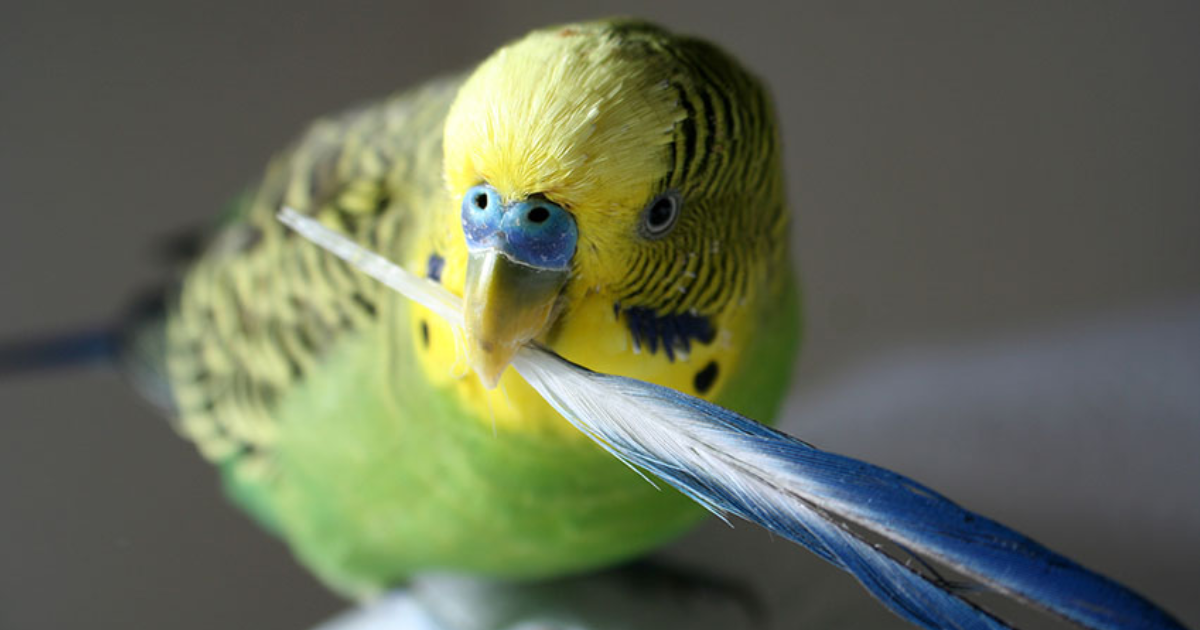
“Why is my bird suddenly losing so many feathers?”
Finding feathers at the bottom of your bird's cage can be alarming, especially if you've never seen your bird go through a moult before.
The good news is that losing and replacing feathers is a completely normal part of a bird's life. Moulting allows old or damaged feathers to be replaced with new ones.
However, not all feather loss is moulting. Knowing what a normal moult looks like — and what doesn't — can help you spot when your bird may need some extra care or veterinary attention.
Table of Contents
What is moulting?
Moulting is the natural process of losing old feathers and growing new ones.
Feathers don't last forever. Over time they become worn and damaged, so birds need to replace them to maintain healthy plumage for flight, insulation and protection.
The timing and frequency of moulting varies between species. Some birds moult once a year, while others may moult more frequently. Indoor pet birds can also have different patterns because their environment, lighting and temperature aren't the same as those experienced by wild birds.
So if your friend's cockatiel moults at a different time to your budgie, that doesn't necessarily mean either bird has a problem.
What does a normal moult look like?
A normal moult can look surprisingly dramatic.
You might notice:
- More feathers around the cage
- Small feathers appearing first
- Increased preening
- Your bird spending more time grooming
- New feathers growing through the skin
- Slightly untidy-looking feathers while old ones are replaced
You may even wonder:
“How can my bird possibly have that many feathers to lose?”
Don't worry — birds have a lot of feathers!
The important thing is that feather loss should generally be gradual and followed by healthy new feather growth, rather than large bald areas appearing suddenly.
What are pin feathers?
If you've never seen a moult before, pin feathers can look a little strange.
Pin feathers are newly growing feathers enclosed in a protective sheath. They can look like tiny spikes or quills sticking through the skin.
As the feather develops, the protective sheath gradually comes away, revealing the new feather underneath.
You'll often notice them around the:
- Head
- Neck
- Face
- Body
Your bird may spend more time preening during this stage because they're helping to remove the sheaths from their new feathers.
Does my bird need more rest during a moult?
Your bird may seem slightly quieter or spend more time preening during a moult. That's not necessarily a concern. Give them plenty of opportunities to:
- Sleep
- Rest
- Preen
- Play at their own pace
- Retreat somewhere quiet
However, if your bird becomes very lethargic, stops playing, stops eating or seems generally unwell, don't assume it's because they're moulting.
That's when you should speak to your vet.
Why is my bird preening more?
During a moult, your bird has lots of new feathers coming through, so you may notice an increase in grooming and preening.
This is normal.
Preening helps birds:
- Keep feathers clean
- Remove old feather material
- Work away the sheaths around new feathers
- Keep their plumage in good condition
Can I bathe or mist my bird during a moult?
For many birds, yes.
A gentle mist with plain, room-temperature water can be a useful part of your bird's normal grooming routine.
Some birds love being sprayed. Others prefer bathing themselves in a shallow dish.
The important things are:
- Use plain water
- Keep the water at a comfortable temperature
- Don't soak your bird
- Allow plenty of time to dry naturally
- Offer bathing earlier in the day rather than just before bedtime
- Don't force a bird that clearly dislikes it
You can use a clean, fine-mist sprayer if your bird enjoys being misted. You don't need special sprays, oils or feather products.
In most cases, simple, clean water is all that's needed.
What's the difference between moulting and feather plucking?
This can be difficult to tell at first, particularly with parrots.
Normal moulting
You may see:
Old feathers falling out → new pin feathers appearing → healthy new feathers growing.
Your bird should generally continue behaving normally.
Feather plucking
You may notice:
Feathers being deliberately pulled, chewed or damaged → bald or uneven areas → abnormal feather growth.
Feather plucking can have a number of possible causes.
The RSPCA highlights factors including lack of enrichment, insufficient opportunities to forage, frightening experiences and poor diet among potential contributors to self-plucking. It recommends seeking advice from a specialist bird vet and an appropriately qualified behaviourist.
So if your bird appears to be actively removing its own feathers, don't simply wait for the moult to finish.
Should I be worried if I find lots of feathers?
Not necessarily. The first time you see a pile of feathers, it can look dramatic.
A useful question is:
“What does my bird look like underneath?”
If you're finding feathers but your bird has healthy new feathers coming through, is eating normally, behaving normally and has no bald or irritated areas, you're likely seeing a normal part of the moult.
If you're seeing patchy feather loss, damaged skin or a change in your bird's behaviour, it's time to investigate further.
Contact your vet if you're unsure whether your bird is moulting normally or if you notice anything that doesn't look right.
Moulting itself shouldn't make your bird seriously unwell. If your bird seems sick, don't assume the moult is responsible.
A common mistake: assuming everything is “just moulting”
This is probably the biggest takeaway from this article.
It's easy to see feathers around the cage and think:
“They're moulting.”
Sometimes that's exactly what's happening.
But moulting shouldn't become an explanation for every type of feather loss.
If something looks unusual, particularly if your bird is pulling feathers out or has bare, irritated areas, it's better to ask your vet than wait for the problem to resolve itself. Birds can hide illness, so early investigation is always preferable.
Read our guide: How Do I Know If My Bird Is Ill? 10 Warning Signs Every Owner Should Know
What we recommend at Smith's Pets
A moult can look much more dramatic than it actually is.
If your bird is otherwise happy, active, eating normally and growing healthy new feathers, finding extra feathers around the cage is usually nothing to panic about.
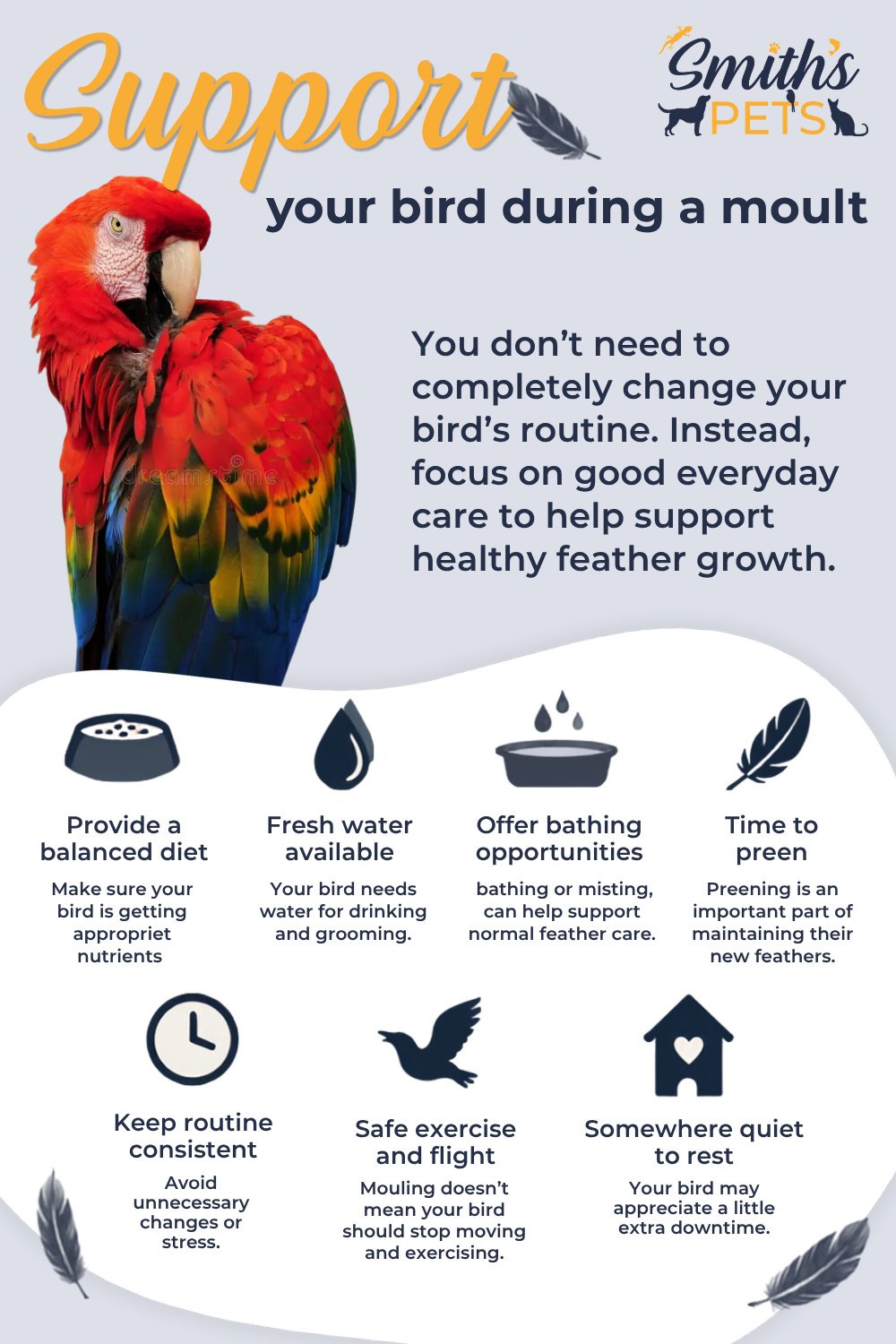
Our advice is to keep their routine as normal as possible, make sure their diet is appropriate, provide fresh water and bathing opportunities if they enjoy them, and give them plenty of time to rest and preen.
If you're unsure whether what you're seeing is a normal moult or something else, don't guess.
Our team can help you talk through what you're seeing and your bird's general care. If there are signs of illness, persistent feather problems or active feather plucking, your vet is the right person to investigate the cause.
Frequently Asked Questions
How long does a bird's moult last?
There's no single timeframe that applies to every bird. The duration and frequency of moulting varies between species and individuals, and indoor conditions can also influence their moult cycle.
If your bird seems to be experiencing an unusually prolonged or abnormal moult, speak to your vet.
Can I touch my bird's pin feathers?
It's best to let your bird manage them through normal preening. New pin feathers can be sensitive, particularly while they are still developing, so avoid picking at or removing the protective sheath.
If your bird actively enjoys gentle head scratches, that's different — but let them decide whether they want contact.
Should I give my bird extra protein during moulting?
Don't automatically add protein supplements simply because your bird is moulting. A balanced, species-appropriate diet should provide the nutrients your bird needs. If you think your bird's diet is lacking, speak to your vet rather than adding supplements without advice.
Why does my bird look scruffy during a moult?
As old feathers are shed and new ones grow, your bird's plumage can temporarily look less tidy than usual. You'll often see a mixture of old feathers, new pin feathers and partially developed feathers. This should improve as the moult progresses.
Can stress cause feather problems?
Yes. Stress can contribute to abnormal feather behaviour, including self-plucking, although there can be many possible causes. If your bird is repeatedly pulling or damaging its feathers, it's worth discussing the problem with an avian vet rather than assuming it's behavioural.