What Should I Feed My Pet Bird? A Simple Guide to a Healthy Bird Diet
If you've ever stood in front of the bird food aisle wondering whether your bird needs seeds, pellets, fresh food or a little bit of everything, you're not alone!
Feeding your pet bird a healthy, balanced diet is one of the most important parts of keeping them happy and healthy. However, with so many different food types available, knowing exactly what to put in their bowl every day can be confusing.
The truth is that not all birds eat the same diet. A budgie has different nutritional requirements to a cockatiel, a finch or a lorikeet. While some birds thrive on a combination of seeds, pellets and fresh produce, others need specialist foods to meet their nutritional needs.
In this guide, we'll look at the different types of food available, what they provide, how much variety your bird needs and how to build a healthy daily feeding routine.
Table of Contents
Why Is a Balanced Diet Important for Pet Birds?
In the wild, birds have access to a wide variety of foods. Depending on their species, this might include seeds, grasses, fruits, flowers, nectar, berries, insects, nuts and vegetation.
This natural variety provides the different nutrients birds need to maintain healthy feathers, strong bones, good digestion, energy levels and a healthy immune system.
Pet birds, however, often have a much more limited diet. It's easy to fall into the habit of filling a food bowl with the same seed mix every day, particularly when your bird seems perfectly happy eating it.
Unfortunately, just because a bird enjoys a particular food doesn't necessarily mean it's providing everything they need.
An unbalanced diet can contribute to several nutritional problems, including:
Vitamin deficiencies: Particularly vitamin A, which is important for healthy skin, feathers and immune function.
Calcium deficiencies: Which can affect bone strength and reproductive health.
Obesity: Particularly in birds consuming too many high-fat seeds and treats.
Liver problems: Which can develop in birds fed diets excessively high in fat.
Poor feather condition: Nutritional deficiencies can affect feather quality and general condition.
Providing a varied diet that's appropriate for your bird's species helps reduce these risks and supports their long-term health.
Seeds: Are They Enough for Your Bird?
Seeds are probably the first food most people associate with pet birds. From budgie mixes to larger parrot blends, there are plenty of options available.
Seeds are a natural part of many birds' diets and can provide energy, fats, protein and other nutrients. However, the important thing to understand is that seeds alone do not provide a complete and balanced diet for many pet birds.
Different seeds also have different nutritional values. Some, such as sunflower seeds, are particularly high in fat.
Another issue is selective feeding. Birds can be surprisingly fussy eaters! Given a mixed seed blend, they may pick out their favourites and leave the rest behind.
This means they might be eating plenty of calories without receiving all the nutrients they need.
Should you still feed seeds?
Absolutely, where appropriate for the species. Seeds can form an important part of the diet for certain birds, particularly finches and some smaller parrot species.
For larger parrots, however, seeds are generally better offered in small quantities as occasional treats or training rewards rather than as the main food source.
The important thing is choosing the right balance for your bird.
Pellets: What Are They and Why Are They Recommended?
Pellets are specially formulated bird foods designed to provide a more consistent balance of essential nutrients.
Unlike traditional seed mixes, where birds can pick out their favourite ingredients, pellets contain a carefully formulated combination of nutrients in each piece.
Depending on the product, these can include:
Essential vitamins and minerals.
Protein and amino acids.
Carbohydrates for energy.
Carefully controlled levels of fat.
Other nutrients required for healthy development and maintenance.
Its general recommendation for parrots is approximately:
75% nutritionally complete pellets
25% fresh fruit and vegetables
This provides a useful starting point for many parrot owners, although individual species, age, health and activity levels can influence dietary requirements.
It's also important to remember that pellets aren't automatically suitable for every bird. Always choose a product specifically formulated for your bird's species.
Top tip: If your bird has always eaten seeds, they might not immediately recognise pellets as food. Introducing them gradually is important, and you should never simply remove their familiar food and expect them to eat something new.
Fresh Vegetables: An Important Part of Your Bird's Diet
Fresh vegetables are an excellent way to add variety, nutrients and enrichment to your bird's daily routine.
Many vegetables provide vitamins, minerals, fibre and other beneficial nutrients. They also introduce different textures, colours and flavours, helping to keep feeding time interesting.
Some suitable vegetables include:
| Vegetable | Why it's a good option |
|---|---|
| Broccoli | Provides vitamins, fibre and other nutrients. |
| Carrot | Contains beta-carotene, which the body can convert into vitamin A. |
| Spinach | Provides vitamins and minerals. Offer as part of a varied selection. |
| Kale | Contains vitamins A, C and K. |
| Peas | Provide plant-based protein, fibre and other nutrients. |
| Bell peppers | Provide vitamins and colourful variety. |
| Cucumber | Contains plenty of water and offers a refreshing texture. |
| Sweet potato | Provides beta-carotene and can be offered cooked and cooled. |
| Green beans | Provide fibre and useful variety. |
How should you prepare vegetables?
A little preparation goes a long way:
- Wash all fresh produce thoroughly to remove dirt and potential pesticide residues.
- Chop vegetables into manageable pieces suitable for your bird's size.
- Offer a mixture of different colours and textures.
- Some vegetables can be offered raw, while others may be more suitable lightly cooked and cooled.
- Avoid adding salt, oils, butter, sauces or seasonings.
You can experiment with different ways of presenting vegetables, too. Try finely chopping them, grating them, offering small pieces on a feeding skewer or mixing them into suitable foraging activities.
Some birds will happily tuck into a piece of broccoli, while others might need a little encouragement before trying something new!
Fruit: How Much Should Your Bird Eat?
Fruit can be a lovely addition to your bird's diet, providing natural sugars, vitamins, antioxidants and variety.
However, fruit should generally be offered in smaller quantities than vegetables because it contains naturally occurring sugars.
Some suitable fruit options include:
Apple (remove the seeds).
Blueberries.
Strawberries.
Raspberries.
Grapes.
Mango.
Melon.
Pomegranate.
Pear (remove the seeds).
Banana.
Try offering small portions of different fruits rather than giving your bird the same thing every day.
Remember: Fruit should complement a balanced diet, not replace nutritionally complete food or vegetables.
Always wash fruit thoroughly and remove any stones, pips or seeds that could be harmful. Apple seeds, for example, should not be fed to birds.
Fresh fruit can also become messy quite quickly, so remove uneaten pieces before they spoil.
Treats: What Can You Give Your Bird?
Just like other pets, birds enjoy a little treat from time to time!
Depending on the species, suitable occasional treats may include:
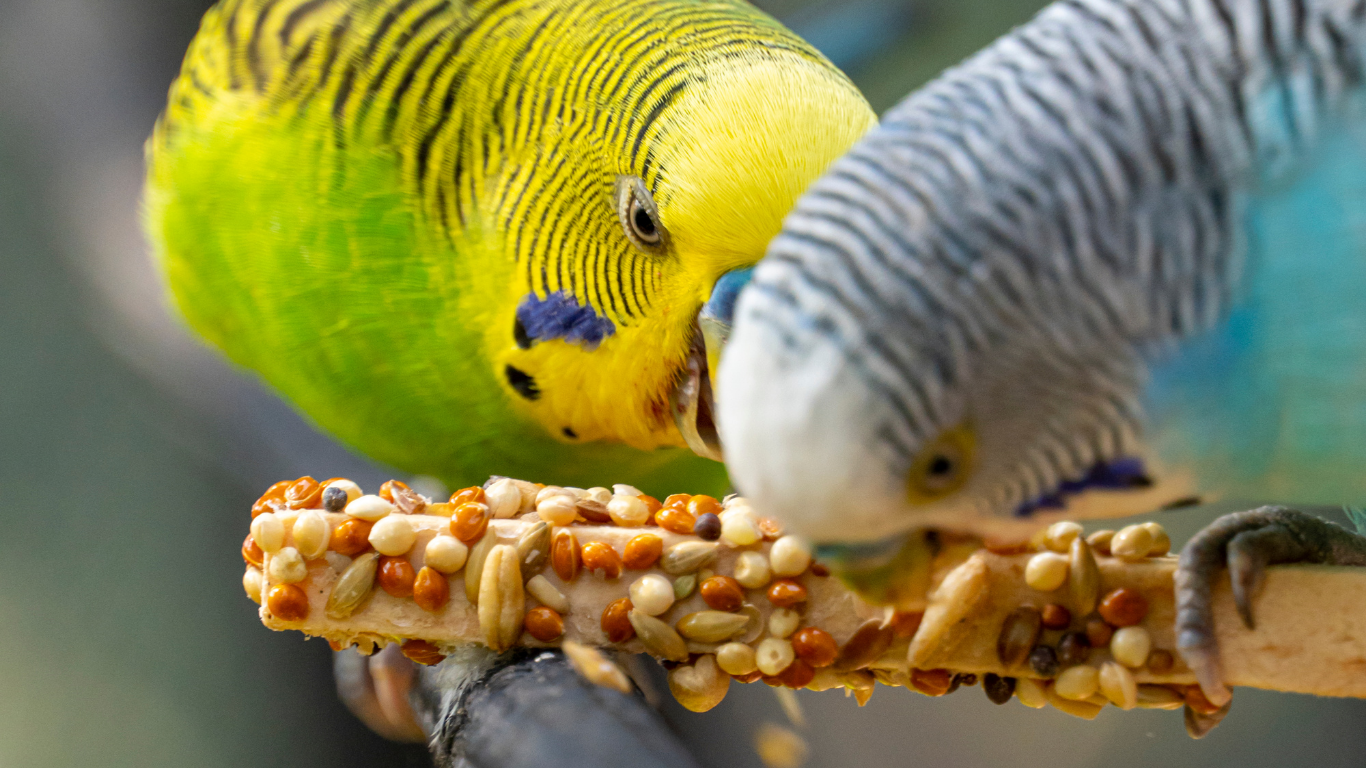
Small quantities of millet spray.
A few sunflower seeds.
Small pieces of suitable nuts (for larger parrots).
A little fresh fruit.
Suitable bird-safe foraging treats.
Species-appropriate dried treats.
The key is moderation.
Many popular bird treats are quite energy-dense, so offering too many can upset the balance of an otherwise healthy diet.
Treats should never make up a significant proportion of your bird's daily food intake.
A useful tip: Rather than putting all your bird's treats in a bowl, try using small pieces as rewards during training or hiding them in bird-safe foraging toys. This encourages natural behaviours and provides mental stimulation.
At a Glance: Different Birds, Different Diets
| Bird species | Main dietary considerations |
|---|---|
| Budgies | Pellets, measured seed, fresh vegetables and some fruit. |
| Cockatiels | Pellets, some seed, fresh vegetables and small amounts of fruit. |
| Finches | Species-specific seed mix, fresh greens and suitable formulated foods. |
| African Greys | Mainly complete pellets, vegetables and some fruit; carefully controlled treats. |
| Amazons | Complete pellets, vegetables and limited fruit, with careful control of high-fat foods. |
| Macaws | Complete pellets, vegetables, some fruit and occasional suitable nuts. |
| Lorikeets | Specialist nectar-based food, alongside appropriate fruit and vegetables. |
These are general feeding guides rather than fixed nutritional prescriptions. Always check the requirements of your particular species.
Why an All-Seed Diet Isn't Suitable for Many Parrots
This is something worth paying particular attention to, especially if your parrot has always been fed a traditional seed mix. Seeds are often marketed as complete bird foods, but a standard seed mix doesn't necessarily provide all the nutrients a companion parrot needs.
Many seed mixes are relatively high in fat and energy but lack sufficient levels of certain essential vitamins, minerals and amino acids.
There are two main problems.
1. Nutritional imbalance
A diet based mainly on seeds can leave birds deficient in important nutrients, particularly calcium and vitamin A.
Over time, these deficiencies can contribute to health problems affecting bones, feathers, immunity and other body systems.
2. Selective eating
Parrots often pick out the seeds they enjoy most, leaving the less appealing ingredients behind.
For example, a bird might consistently choose sunflower seeds because it enjoys their taste, without eating enough of the other foods needed for a balanced diet.
This can result in a diet that's much higher in fat than intended.
The RSPCA highlights the risks associated with feeding parrots an all-seed diet, including obesity, fatty liver syndrome and vitamin deficiencies.
Does this mean seeds are bad?
Not at all. Seeds are a natural food for many bird species and can still have a place in a healthy diet.
The important thing is understanding how much your particular bird needs and ensuring seeds aren't replacing more nutritionally complete foods.
How Much Should I Feed My Bird Each Day?
This is one of the most common questions bird owners ask, but unfortunately, there isn't one simple answer.
The amount of food your bird needs depends on several factors:
Species and natural feeding habits.
Body size and weight.
Age and stage of development.
Activity levels.
Health and individual nutritional requirements.
Whether your bird is breeding, moulting or recovering from illness.
For many pet parrots, the RSPCA's suggested starting balance is approximately 75% complete pellets and 25% fresh fruit and vegetables.
However, this should not be applied automatically to budgies, cockatiels, finches, lorikeets or other species with different dietary requirements.
It's also important to understand that a food bowl looking full doesn't necessarily mean your bird has eaten everything in it. Seed husks, for example, can make a bowl appear full even when most of the edible food has gone.
A few practical feeding tips:
Follow the feeding guidance supplied with your bird's food.
Measure dry food rather than continually topping up the bowl.
Offer fresh produce in suitable, manageable portions.
Monitor how much your bird actually eats.
Remove uneaten fresh food before it spoils.
Keep an eye on your bird's weight and general condition.
If you're unsure about portion sizes, an avian vet can help you work out an appropriate daily feeding plan.
Fresh Water: An Essential Part of Your Bird's Diet
It's easy to focus on food when thinking about bird nutrition, but fresh drinking water is just as important. All pet birds should have access to clean, fresh drinking water throughout the day.Birds can be surprisingly messy around their food and water bowls, and water can quickly become contaminated with food, droppings or debris.
To keep your bird's water supply clean:
Provide fresh drinking water every day.
Check water bowls regularly and refill when necessary.
Clean and wash water containers frequently.
Position water bowls where they are less likely to become contaminated.
Avoid leaving dirty water in the cage.
Some birds enjoy bathing in their water dishes, so you may need to provide a separate bathing area to help keep drinking water clean.
Never add supplements or vitamins to drinking water unless specifically advised by your avian vet. These can affect how much a bird drinks and may not provide a reliable way of delivering nutrients.
Foods You Should Never Feed Your Pet Bird
While many everyday fruits and vegetables are suitable for birds, some foods can be dangerous or toxic.
It's important to know which foods should never make their way into your bird's bowl.
| Food | Why to avoid it |
|---|---|
| Avocado | Highly toxic to parrots and potentially fatal. |
| Chocolate | Contains compounds that are toxic to birds. |
| Caffeine | Can affect the heart and nervous system. |
| Alcohol | Toxic and potentially life-threatening. |
| Onion and garlic | Can cause harmful effects and should not be fed. |
| Apple seeds | Contain compounds that can release cyanide. |
| Fruit stones and pips | Some contain toxic compounds and can also present choking risks. |
| Salty foods | Excess salt can be harmful to birds. |
| Mouldy or spoiled food | Can contain harmful toxins and microorganisms. |
Never assume that a food is safe simply because it's natural or suitable for humans.
If your bird accidentally eats something potentially toxic, contact an avian vet immediately rather than waiting for symptoms to develop.
How to Introduce New Foods to a Fussy Bird
Some birds will happily try anything you put in front of them. Others can be incredibly suspicious!
If your bird has spent years eating the same seed mix, it might take time to encourage them to try pellets, vegetables or other unfamiliar foods.
The key is patience and gradual introduction.
Here are a few ways to encourage your bird to explore new foods:
1. Start with small amounts
Introduce one new food at a time, offering a small piece alongside their usual diet.
2. Experiment with textures
Try grating carrot, finely chopping broccoli or offering small pieces of leafy greens. Different birds prefer different textures.
3. Make food interesting
Birds are natural foragers. Try presenting suitable foods on bird-safe feeding skewers or in foraging toys.
4. Eat together
Some parrots are more willing to investigate food when they see their owners eating something similar. You can use this curiosity to encourage them to try new foods, provided the food is safe for birds.
5. Be patient
It can take repeated exposure before a bird accepts something unfamiliar. Don't assume they dislike a food simply because they ignore it the first time.
Important: If you're transitioning a bird from a seed-based diet to pellets, never remove its familiar food suddenly. Birds can refuse unfamiliar foods and may not eat enough to maintain a healthy weight.
How to Keep Your Bird's Diet Interesting
A healthy diet doesn't have to be boring!
In fact, providing variety can help encourage natural foraging behaviours and give your bird something interesting to investigate throughout the day.
Here are a few simple ideas:
Rotate suitable vegetables and fruits rather than offering the same selection every day.
Try different ways of preparing and presenting fresh food.
Use bird-safe feeding skewers for suitable pieces of fruit and vegetables.
Hide small amounts of appropriate food in foraging toys.
Introduce new textures and colours.
Use suitable seeds or nuts as occasional training rewards.
Remember that enrichment should complement good nutrition, not replace it.
The Bottom Line: What Should Your Bird Be Eating?
The best diet for your bird is one that meets its specific nutritional requirements, provides variety and supports a healthy, active life.
For many parrots, that means nutritionally complete pellets alongside fresh vegetables and smaller amounts of fruit, with seeds and nuts used more sparingly.
For finches, budgies, cockatiels and other species, the balance can look quite different. And for specialist nectar feeders such as lorikeets, a completely different feeding approach is needed.
The most important thing is not to assume that all birds eat the same thing.
If you're unsure whether your bird is getting the right nutrition, speak to an avian vet who can help you develop a feeding plan suited to its species, age and individual needs.
At Smith's Pets, we're always happy to help you find suitable food for your feathered friend. Whether you're welcoming a new bird into your home or simply looking to improve your existing feeding routine, choosing the right diet is a great place to start.
A little variety and the right nutritional balance can make a big difference to your bird's health and wellbeing!