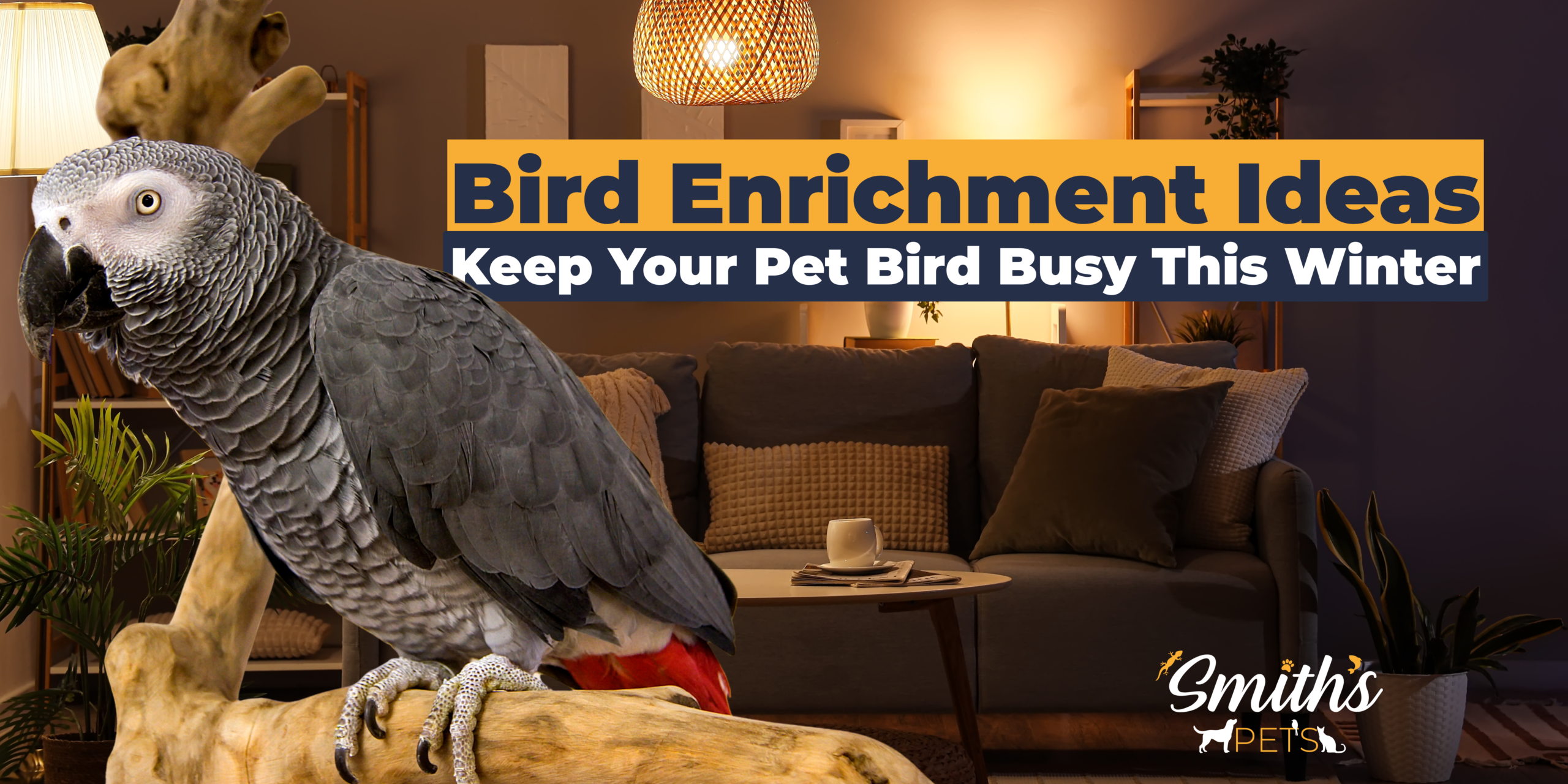
Looking for bird enrichment ideas to keep your feathered friend entertained this winter? as the days get shorter and the weather gets colder, our daily routine begin to change. we spend more time indoor, daylight hours became limited, and our [ets may expericne changes to their usual activities too.
For pet birds, particularly intelligent and social species such as parrots, conures, cockatiels and budgies, a lack of mental stimulation can lead to boredom, frustration and unwanted behaviours.
But keeping your bird entertained doesn't necessarily mean filling its enclosure with expensive toys. Sometimes, the best enrichment comes from understanding how your bird would naturally spend its time.
In this guide, we'll explore practical bird enrichment ideas that encourage natural behaviours, support physical activity and help keep your feathered friend entertained throughout the colder months.
Why Is Enrichment Important for Pet Birds?
In the wild, birds spend a considerable amount of their day searching for food, exploring their surroundings, communicating and interacting with other birds.
Depending on the species, they may also spend hours climbing, flying, chewing, preening and investigating unfamiliar objects.
Our pet birds still have many of these natural instincts, even when their food arrives conveniently in a bowl every morning!
Without enough opportunities to express these behaviours, some birds may become frustrated or understimulated.
Signs Your Bird Might Be Bored
Some behaviours associated with insufficient stimulation include:
- Excessive screaming or attention-seeking behaviour.
- Repetitive movements, such as pacing.
- Destructive behaviour directed towards inappropriate objects.
- Reduced interest in toys or activities.
- Increased irritability or changes in social behaviour.
However, these behaviours aren't always caused by boredom.
Changes in behaviour can also indicate stress, unsuitable housing, poor sleep or underlying health problems.
If your bird suddenly starts behaving differently, particularly if you notice changes in appetite, droppings, breathing or activity levels, contact an avian veterinarian.
Easy Bird Enrichment Ideas: Turn Mealtimes Into Foraging Adventures
Imagine eating every meal from the same plate, in the same location, every single day.
It would get pretty boring, wouldn't it?
For many wild birds, finding food is an activity in itself. They spend time investigating their environment, manipulating objects and working out how to reach food.
Foraging enrichment encourages your bird to use these natural problem-solving abilities.
Instead of offering every treat directly from your hand or food bowl, try introducing activities that make your bird work a little harder for its rewards.
Simple Foraging Activities to Try at Home
Paper parcels: Wrap a small portion of your bird's usual food or a suitable treat in plain, bird-safe paper and encourage them to investigate.
Foraging trays: Create a shallow tray containing bird-safe shreddable materials with a few favourite treats hidden throughout.
Foraging toys: Use specially designed bird toys that require your bird to lift, pull, turn or manipulate objects to access food.
Hidden treats: Place small amounts of food in different accessible locations around a safe play area.
Remember to introduce foraging gradually. Birds that have never encountered these activities may need you to demonstrate how they work.
Always ensure your bird can access its normal balanced diet and fresh drinking water. Foraging should provide enrichment, not prevent your bird from eating.
Looking for Bird Foraging Toys?
At Smith's Pets, we stock a variety of bird enrichment products designed to encourage natural food-searching behaviours.
From simple shreddable toys to interactive foraging accessories, our bird department can help you find something suitable for your feathered friend.
Visit our Portrack Lane store to explore our range of bird foraging toys and enrichment accessories.
Rotate Your Bird's Toys Instead of Constantly Buying More
It's tempting to purchase a new toy whenever your bird appears uninterested in its current collection.
However, constantly introducing unfamiliar objects can be overwhelming, particularly for more cautious birds.
Instead, consider creating a small rotation of suitable toys.
Keep a selection available and occasionally swap one or two for something different.
This helps maintain interest without completely changing your bird's familiar environment.
What Makes a Good Bird Toy?
Different toys encourage different natural behaviours.
Shreddable toys: Encourage tearing, chewing and manipulating materials.
Foraging toys: Provide opportunities for food searching and problem-solving.
Climbing toys: Encourage movement, coordination and exploration.
Foot toys: Allow suitable species to pick up, hold and investigate objects.
Not every bird enjoys the same activities!
Some parrots love destroying shreddable materials, while others prefer manipulating objects or climbing.
Observe which activities your bird naturally gravitates towards and use this information when choosing enrichment.
Always inspect toys regularly for damage, loose components, entanglement risks or materials that could be swallowed. Remove anything that becomes unsafe.
Encourage Natural Movement With Java Tree Perches
Birds are built to move.
Even species that spend considerable time climbing still benefit from opportunities to stretch, balance, explore and exercise.
One of our favourite bird enrichment ideas is providing a dedicated bird-safe play area outside the enclosure.
Why We Love Java Tree Perches
Java tree perches are made from natural wood and often feature multiple branches at different heights and angles.
Unlike a single straight perch, their irregular structure provides opportunities for birds to:
- Climb and explore different levels.
- Practise balancing on varied branch shapes.
- Exercise their feet and leg muscles.
- Move between different resting positions.
- Enjoy supervised time outside their enclosure.
They can also provide a convenient location for introducing suitable toys and foraging activities.
Create a Natural Play Area for Your Bird
At Smith's Pets, we stock Java tree perches that can help you create a more interesting environment for your bird.
When choosing a Java tree, consider your bird's size, weight, climbing ability and available space.
Make sure the stand is stable, the branches are appropriately sized and your bird can move comfortably.
Java trees should complement, rather than replace, suitable perches inside a spacious enclosure.
Pop into our Portrack Lane store to explore our Java tree perches and speak to our bird department about creating an enriching play space.
Make Time for Safe Flight and Exercise
During winter, it can be tempting to spend more time relaxing indoors.
However, our birds still need regular opportunities to exercise.
For flighted birds, flying is an important natural behaviour that supports physical fitness, coordination and mental stimulation.
Where appropriate, provide opportunities for supervised flight in a safe, secure indoor environment.
Before Letting Your Bird Out
Check that:
- Windows and external doors are securely closed.
- Ceiling fans are switched off.
- Mirrors and large windows are made visible to prevent collisions.
- Other pets are safely separated.
- Toxic plants, exposed electrical cables and dangerous household objects are inaccessible.
- Cooking areas, hot surfaces and open water are out of reach.
For birds that are unable to fly, climbing, walking and exploring suitable play structures can still provide valuable exercise.
Remember, out-of-cage time should always be supervised and adapted to your individual bird's abilities.
Spend Quality Time Together
Birds are social animals, although their social needs vary considerably between species and individuals.
For some companion birds, interaction with their owners forms an important part of their daily routine.
And the good news?
You don't need expensive equipment to spend quality time with your bird.
Try Short Training Sessions
Short, positive reinforcement training sessions can provide excellent mental stimulation.
Teaching your bird to step onto a perch, touch a target or respond to a familiar cue encourages learning and communication.
Keep sessions short, reward desirable behaviour and allow your bird to choose whether to participate.
Encourage Social Interaction
Many birds enjoy vocal communication with familiar people.
Talking, whistling or responding to your bird's natural calls can provide opportunities for social interaction.
However, not every bird enjoys constant attention.
Learn to recognise when your bird wants to interact and when it would prefer some quiet time.
Provide Opportunities to Preen
Preening is a natural behaviour that helps birds maintain their feathers.
Providing suitable bathing opportunities can encourage normal feather maintenance, whether your bird prefers a shallow bath or a gentle misting with clean water.
Some birds also enjoy gentle head scratches from trusted people, but only when they actively welcome this contact.
Avoid stroking the back, wings or lower body, as this can encourage hormonal behaviour in some companion parrots.
Research Your Bird's Natural Behaviour
One of the most useful bird enrichment ideas is something that doesn't cost a penny.
Research how your bird behaves in the wild.
Different bird species have evolved to interact with their environments in very different ways.
Understanding these differences can help you provide enrichment that genuinely meets your bird's needs.
Budgies
Wild budgerigars are highly social, active birds that spend time travelling and searching for seeds and other suitable foods.
Opportunities for flight, social interaction and food searching are particularly important.
Cockatiels
Cockatiels naturally spend time foraging on the ground.
Safe, supervised ground-level foraging activities can be an interesting addition to their routine.
Conures
Many conures are active, curious birds that enjoy climbing, chewing and investigating objects.
Shreddable toys, climbing opportunities and suitable foraging challenges can help satisfy these instincts.
Larger Parrots
Species such as cockatoos and African greys can have complex social and cognitive needs.
Varied enrichment, appropriate social opportunities and positive reinforcement training can play important roles in their welfare.
These are general examples, and individual birds will have their own preferences.
Research your bird's particular species, including its natural habitat, diet, social structure, activity patterns and foraging behaviour.
Rather than asking yourself, "What toy should I buy next?", try asking:
"What would my bird naturally be doing if it had the opportunity?"
That simple change in perspective can make a huge difference to the way you approach enrichment.
Remember That Rest Is Just as Important as Play
Although enrichment is essential, birds also need predictable routines and adequate rest.
During winter, shorter daylight hours and changes to household routines can affect their sleeping environment.
Many companion parrots benefit from approximately 10 to 12 hours of uninterrupted sleep, although individual requirements vary.
Provide a quiet, dark and comfortable sleeping environment appropriate for your bird.
Avoid keeping your bird awake late into the evening simply because the household is still active.
A well-rested bird is generally better equipped to engage with its environment during the day.
When Is Boredom Something More Serious?
It's easy to assume that a bird displaying unusual behaviour simply needs more attention or entertainment.
However, birds are particularly good at concealing signs of illness.
A bird that suddenly becomes quiet, stops playing or appears less interested in its surroundings may not be bored at all.
Contact an avian veterinarian if you notice:
- A sudden change in behaviour or activity.
- Reduced appetite or unexplained weight loss.
- Changes in droppings.
- Persistent feather damaging behaviour.
- Fluffed-up feathers accompanied by lethargy.
- Breathing difficulties or unusual respiratory sounds.
Breathing difficulties, marked weakness or a bird sitting fluffed up and unresponsive require urgent veterinary attention.
Never assume that persistent feather plucking, screaming or repetitive behaviour is simply a sign that your bird needs another toy.
Identifying the underlying cause is essential.
Discover More Bird Enrichment Ideas at Smith's Pets
Keeping your bird entertained during winter doesn't have to be complicated.
The best bird enrichment ideas aren't necessarily the most expensive. They're the ones that encourage your bird to explore, learn and express its natural behaviours.
From introducing simple foraging activities to providing opportunities for climbing, exercise and social interaction, small changes can make a meaningful difference to your bird's daily life.
Looking for something new to keep your feathered friend entertained?
Visit the bird department at Smith's Pets on Portrack Lane, Stockton-on-Tees, where you can explore our selection of:
- Java tree perches and natural wood perches.
- Foraging toys and food-search activities.
- Shreddable toys and bird-safe enrichment.
- Species-appropriate accessories for your bird's enclosure.
Our team can help you explore suitable options based on your bird's species, size and individual needs.
And remember, the best enrichment starts with understanding your bird, not simply filling its enclosure with more toys!